
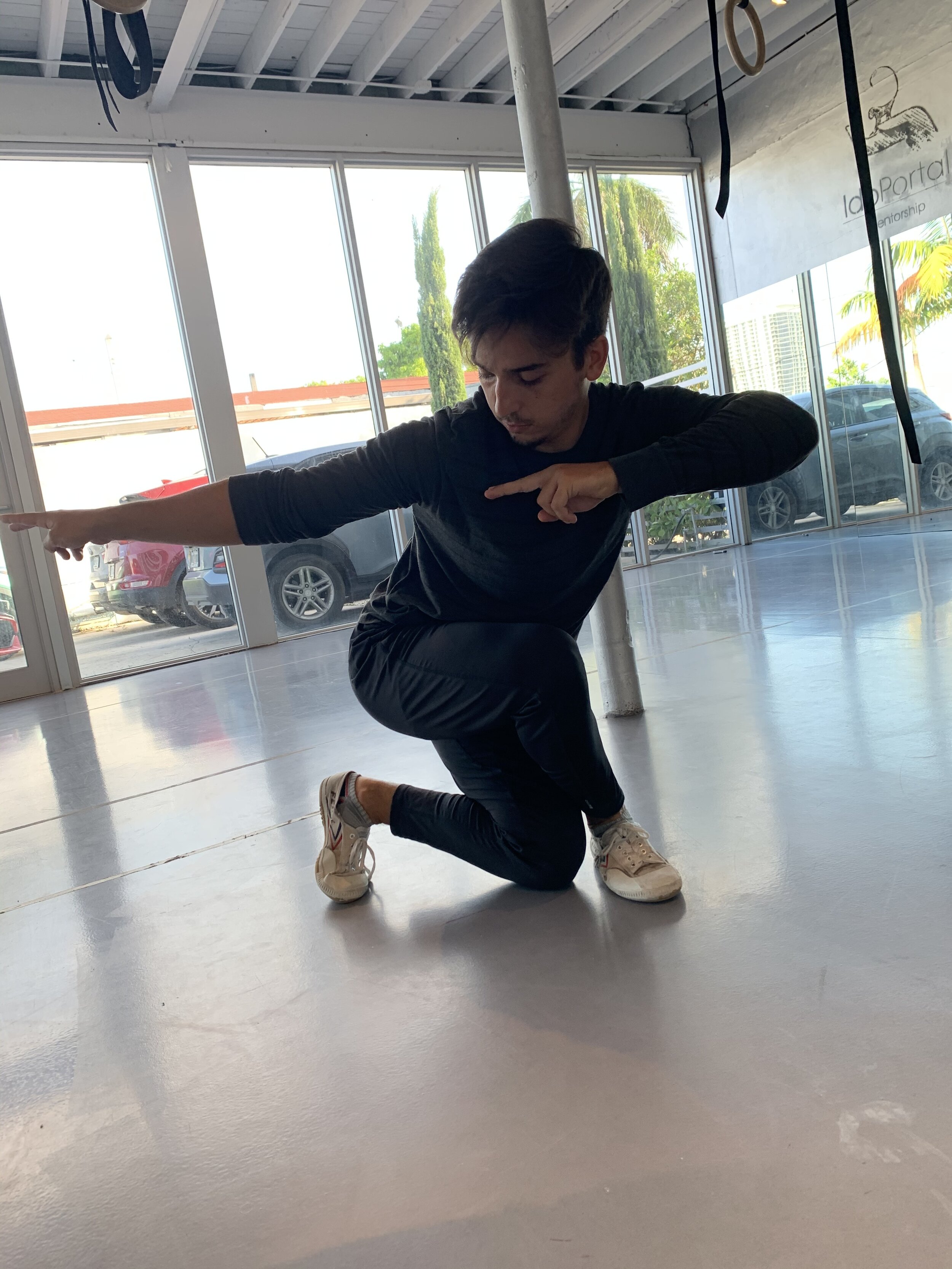
Natural Movement
A better way to think about “natural” movement… and it isn’t about the movement.
We are often accused of participating in “natural movement”. As though there were anything else, any other kind of movement. It’s natural, all the way down.
Maybe a better way to think of natural, when speaking of movement, is not to use it to refer to some primal/ancestral type of dogma, but rather to describe the situation in which the movement is natural to the person executing it, meaning that it belongs to that person in the deep sense that it no longer requires consideration for execution, can occur without invoking Feldenkrais’ “supralymbic” system.
This suggests that the characterization of natural is not actually about the “movement” itself, as some decontextualized phenomena (as though a movement can exist apart from a mover!). Rather, we use it to describe the relationship between movement and mover (maybe analogous to the nondualist sense of a mind and a thought).

On Frustration, Practice, and Awareness (aka Escape from the Hypercube)
The path is never as straightforward as it seems. This characterizes a real practice - you can’t fall asleep with your foot on the pedal… We aren’t interested in a process which invites somnolence; life is too short to be doing things half checked out. I’d rather play inside the hypercube of practice; here I can learn and practice to be “awake” - at the very least, so I can be awake at the moment of my death.
A common sentiment - frustration when the thing that worked yesterday, doesn’t work today. By all logic, I should be better… and yet, the same approach that brings me from point A to point B in the past may bring me up against a wall today.
In the movies Cube and Hypercube, a group of people must escape from a building. However, the rooms of the building change and reorient in 3 planes (and four, in hypercube) every time they move (imagine trying to escape a transdimensional Rubiks cube).
Plot twist - each room kills the subjects, always in a different manner.
The path is never as straightforward as it seems. This characterizes a real practice - you can’t fall asleep with your foot on the pedal… We aren’t interested in a process which invites somnolence; life is too short to be doing things half checked out. I’d rather play inside the hypercube of practice; here I can learn and practice to be “awake” - at the very least, so I can be awake at the moment of my death.
Every day we wake up, and we try again. The challenge shifts, slightly, playing that game, dancing that dance. The frustrations come. Baruch Hashem. Movement practice is an antidote to the grooves of routine.
Every day, the mind begins to predict the task, to defer to what worked yesterday. That’s what the mind does, to be fair - it conserves effort. Summoning the impression, recalling it, clarifying it, is strenuous psychic work…
But if something is straining to overcome the mind… what’s that thing? This, the hardest of the soft problems, the softest of the hard problems…a movement practice helps to reveal.
Be like the hero in cube - stay on your toes, keep thinking, and don’t die.

Fallacy of teleology of design
The origin of the design doesn’t speak to whether it is right to use it for a purpose. That’s an illusion - the fallacy of teleology of design (a trap I walk into on a regular basis). Fate happens now, and we decide what things are “made” for, by using them for such.
What it was made for is a starting point, not an ending point. It may determine parameters which constrain future repurposing, vectors which determine what directions of growth are possible. Of course, mind the origins of the thing: It speaks to respect, ancestry, humility. Bind the sacredness of origin with the pursuit of complexity.

“That’s not made for that” - Passerby pointing at the rail, commenting on me working on rail balance.
And the internet wasn’t designed by the Department of Defense for cryptographic records, and yet we have blockchain, nor for upturning financial systems, and yet we have cryptocurrencies, nor was it made to amplify our social nature, and yet we have social media. And onwards we march, towards web 3.0.
Nor was the body made for modern food nor our feet for shoes. Fingers weren’t made for spelling, much less for reading (braille). Whatever you’re doing with your body, after the age of 6 months, you can be sure it wasn’t “designed” for that.
The spine wasn’t made for expression. In fact, there is a whole class of structures/functions which the absence of doing non-designed things with causes a deterioration of. You sometimes have to use things in ways they weren’t intended, to maintain their capacity for general functionality.
One more: the breath was not made for focusing, the mind not made to be analyzed. And yet, what vista into the nature of consciousness they have opened for us. Maybe that speaks to the penultimate question, of what is the mindbody phenomenon for? Maybe it doesn’t matter.
None of this speaks to the “right” thing to do with a technology; the origin of the design doesn’t speak to whether it is right to use it for a purpose. That’s an illusion - the fallacy of teleology of design (a trap I walk into on a regular basis). Fate happens now, and we decide what things are “made” for, by using them for such.
What it was made for is a starting point, not an ending point. It may determine parameters which constrain future repurposing, vectors which determine what directions of growth are possible. Of course, mind the origins of the thing: It speaks to respect, ancestry, humility. Bind the sacredness of origin with the pursuit of complexity.
We should be careful about falling into this fallacy of the teleology of design - it applies just as much to the technologies around us as much as the technology which IS US.
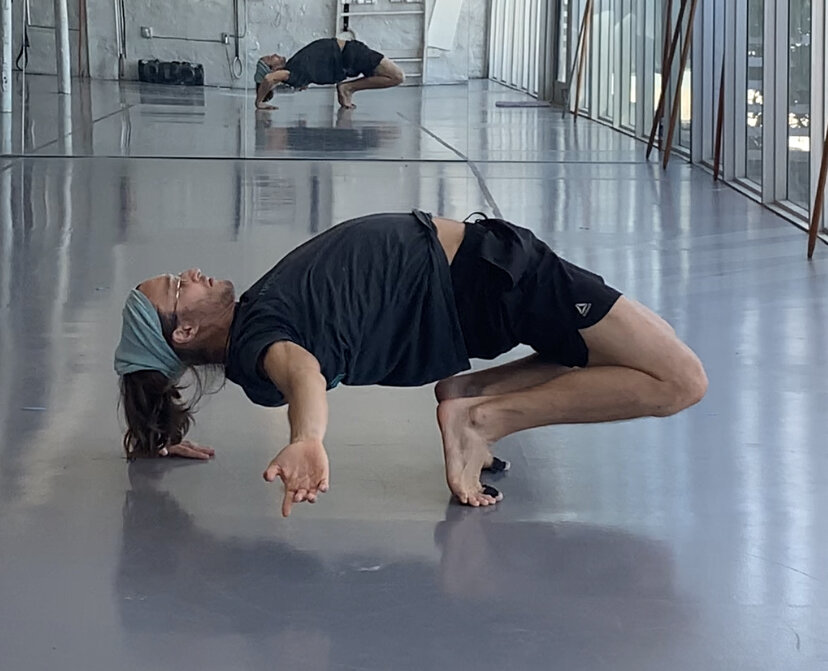
Moving forward
We’ve reopened for about a month now, and I have had time to process a lot of thoughts from the prior lockdown, and see certain ideas take shape.
We’ve reopened for about a month now, and I have had time to process a lot of thoughts from the prior lockdown, and see certain ideas take shape.
The change of pace during the lockdown gave us much-needed room to step back and look at things from new angles, ask new questions, and especially consider how we can do a better job of what we are trying to do, including sharing with a small community and perpetually elevating our own practice.
It was tumultuous and filled with doubt and uncertainty. I had not been pleased with how our classes had been evolving prior to the lockdown. And I felt too slow to react, always a step behind. So when the global pause button was hit, I jumped at the opportunity to recalibrate, reorient, realign.
I decided that if I was to continue teaching classes, a few changes would have to happen. Limiting class sizes, not for hygiene, but to match my still-growing ability as a teacher to manage a group. Changing the way decisions were made about what to share, and also… HOW to share them. And of course, making an explicit priority for myself of developing as a teacher and leader of a community.
And a month after reopening our doors to students, I can say… it was the best thing that could have happened for us. I’m amazed and humbled and grateful for the wonderful group of practitioners we have here. We are less focused on growing at the moment, and more focused on going deep, setting strong roots based on practice. I have a much clearer sense of what we’re about, what direction we’re trying to take students in.
All those words just to say... thank you all, just for sharing together this ride called life, whether from close or afar.

Meditation & Self
Meditating isn’t about being alone with your thoughts; it’s about being alone without them.
We finished a session last week with a 30 minute standing meditation (for those who wanted to stay a bit longer - which turned out to be 99% of the students). As we wrapped up with a discussin, the phrase “ego death” came up to describe the experience.
I am reminded of a misconception, the idea that meditation/stillness is about being alone with your thoughts. Maybe not, however: meditating isn’t about being alone with your thoughts; it’s about being alone without them. And discovering, there is still some “thing” there. As the students put it, ego death, the cessation of the default mode network.
Lately, we have been working on a kind of “proprioceptive hack” in our meditation, using the weird relationship between body and mind to create a loop that gradually reduces the noise of thoughts. It’s a brilliant device learned from our teacher, Ido.
In this practice, something curious arises - we lose the default sense of our body (reminiscent possibly of psychedelics?), and this has a distinct effect on the sense of who/what we are. Which speaks to the rub in the riddle of the mindbody phenomenon - your sense of a body is constructed. And that sense influences how you experience your self - in fact, it isn’t separable from it: as you change how you sense your body, YOU change. Losing your body means losing the distinction between you and the world around you - that’s not an illusion… it’s just another state of experience, no more and no less descriptive than any other, but certainly less common. Rodolfo Llinas, the researcher, gives us the beautiful metaphor “I of the Vortex”.
Looking forward to another week of playing in the vortex.